

Smoked brisket is the pinnacle of BBQ. It’s also the most technically demanding cook — 12–18 hours, multiple stages, and a dozen variables that can make or break the result. This step-by-step guide covers everything from selection to slicing.
Gear You’ll Need
- MEATER Plus wireless thermometer — for remote monitoring
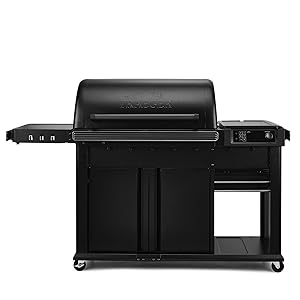
- Traeger Ironwood XL or equivalent pellet grill (or offset smoker)
- ThermoWorks Thermapen ONE — for probe-tender testing
- Pink butcher paper (not foil — foil softens the bark)
- Sharp slicing knife (12+ inches)
- Cooler for resting
Step 1: Select the Right Brisket
Buy a full packer brisket (both flat and point together, typically 12–18 lbs). USDA Choice or Prime grade — Prime has more intramuscular fat that keeps the flat from drying out during the long cook. Avoid “Select” grade for brisket.
Plan for a cook time of roughly 1 to 1.5 hours per pound at 225°F.
Step 2: Trim the Fat Cap
Trim the fat cap to approximately 1/4 inch — enough to protect the meat and render during cooking, but thin enough to allow bark formation. Remove any hard, white fat chunks that won’t render (called “deckle fat”). This takes 20–30 minutes with a sharp boning knife.
Step 3: Season Generously
Central Texas style (our recommendation): 50/50 mix of coarse kosher salt and coarse black pepper, applied liberally to all surfaces. Apply the rub 1 hour before cooking or the night before (overnight in the fridge builds a better bark).
Step 4: Set Up Your Smoker
- Target temperature: 225°F–250°F
- Wood: Post oak or oak/hickory blend
- If using a pellet grill: Enable Super Smoke mode (Traeger) or maximum smoke setting
- Insert the MEATER probe into the thickest part of the flat before placing on the grill
Step 5: The Cook
Place the brisket fat-side up on the grill (fat cap up for pellet grills and offsets). Don’t touch it for the first 6 hours — you’re building the bark and developing a smoke ring.
The Stall (155°F–170°F): Temperature will plateau for 2–4 hours. Don’t panic — this is normal evaporative cooling. You have two choices:
- Wait it out: Add another 2–3 hours to your timeline
- Texas Crutch: Wrap tightly in pink butcher paper when the brisket reaches a dark mahogany color (usually around 165°F) and the bark feels set. This pushes through the stall faster.
Step 6: Test for Doneness
Internal temperature is a guide, not the finish line. The brisket is done when:
- Internal temperature is 200°F–205°F in the flat
- A probe or skewer slides into the thickest part of the flat with zero resistance — like pushing into warm butter
The probe test is more important than the temperature reading. A brisket can be probe-tender at 198°F or need to reach 210°F — every brisket is different.
Step 7: Rest (Mandatory)
Wrap the brisket in butcher paper, then in a beach towel, and place in a cooler (no ice) for at least 1 hour, preferably 2 hours. This rest allows the muscle fibers to relax and reabsorb juices. A properly rested brisket loses 30–40% less juice when sliced.
Step 8: Slice and Serve
- Locate the grain direction in the flat (muscle fibers run lengthwise)
- Slice the flat against the grain into 1/4-inch slices
- At the point (the thicker, fattier end), change direction — the grain runs perpendicular
- Slices should be tender enough to pull slightly apart without completely falling apart
Troubleshooting
| Problem | Cause | Fix |
|---|---|---|
| Dry flat | Overcooked, under-rested, or Select grade | Use Prime or Choice; extend rest time |
| No bark | Wrapped too early or rub too thin | Wait for dark mahogany color before wrapping |
| No smoke ring | Grill not producing enough smoke in early cook | Start in smoke-heavy mode; don’t wrap until 165°F |
| Undercooked flat | Pulled at temperature, not at probe-tenderness | Use the probe test, not just temperature |