

Why Pellet Grills Produce Less Smoke Than Offset Smokers
Pellet grills prioritize temperature stability over smoke production. The auger cycles pellets to maintain temperature — when the fire burns cleanly and efficiently, it produces less visible smoke and fewer smoke compounds. Offset smokers run hotter fires with less efficient combustion, which produces more smoke as a byproduct. The good news: several specific techniques can significantly increase smoke output from any pellet grill.
7 Ways to Get More Smoke Flavor from Your Pellet Grill
1. Use Smoke-Specific Mode at Low Temperature
Every pellet grill produces the most smoke at its lowest temperature settings. At 160°F–225°F, the fire runs less completely and the auger cycles more aggressively — both create more smoke.
- Traeger: Enable Super Smoke mode at temperatures ≤225°F — doubles smoke output
- Camp Chef: Set Smoke Control to 7–10 at any temperature — 10 produces the most smoke output of any pellet grill
- Pit Boss: Set the dial to “S” (Smoke) mode — 180°F setting with maximum smoke cycling
- All grills: Start your cook at 160°F for the first hour, then raise to your target temperature
Place your protein on the grill straight from the refrigerator — cold meat condenses smoke compounds on its surface more effectively than room-temperature meat. This alone increases smoke ring development.
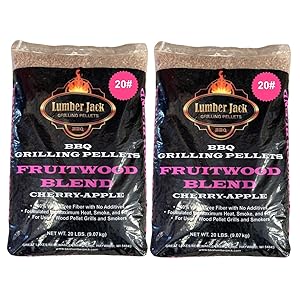
2. Upgrade to High-Smoke Pellets
Not all pellets produce the same amount of smoke. The key variable is the ratio of hardwood to bark — more bark = more smoke compounds. Stronger wood species also produce more aromatics:
| Pellet Type | Smoke Intensity | Best For |
|---|---|---|
| Mesquite | Very strong | Short cooks — steaks, burgers (not brisket) |
| Hickory | Strong | Beef brisket, pork shoulder, ribs |
| Lumber Jack Competition Blend | Strong | Versatile — best all-around high-smoke pellet |
| Oak / Post Oak | Medium-strong | Traditional Texas BBQ |
| Pecan | Medium | Pork, chicken, mild beef |
| Apple / Cherry | Mild | Poultry, fish, delicate pork |
| Traeger Signature Blend | Mild-medium | Everyday cooking — not for max smoke |
Best choice for maximum smoke: Lumber Jack Competition Blend (hickory, cherry, maple) or pure hickory for beef-focused smokes.
3. Keep Pellets Fresh and Dry
Moisture-compromised pellets are the #1 hidden cause of weak smoke. When pellets absorb moisture, they burn less efficiently and produce steam instead of smoke compounds. Fresh, dry pellets have more volatile aromatic compounds to release.
- Store pellets in an airtight container — never in an open bag or in the hopper long-term
- Quality pellets snap cleanly when broken; moisture-damaged pellets crumble or bend
- If pellets have been in the hopper more than a week, discard and replace with fresh stock
- In humid climates, store pellets indoors — garage humidity can compromise a 40 lb bag in 2 weeks
4. Add a Smoke Tube or Smoke Box
A perforated stainless steel smoke tube filled with pellets or wood chips burns independently of the grill’s fire pot — adding supplemental smoke regardless of what temperature the grill is running at. Place it anywhere on the grill grate.
- Fill with the same pellets as the hopper, or mix in stronger wood chips
- Light one end with a torch until it’s producing white smoke, let the flame die, place on grate
- Burns for 2–4 hours and adds smoke at any grill temperature — even during the high-heat phase
- Works on any pellet grill, gas grill, or even a charcoal grill
At higher temperatures (300°F+), your pellet grill’s smoke output drops significantly. A smoke tube placed on the grate continues producing smoke independently regardless of the fire pot’s burn efficiency.
5. Start the Cook at Low Temperature (Smoke Phase First)
The smoke ring develops during the first hours of the cook, before the meat surface reaches 170°F. The lower you run the grill during this window, the more smoke flavor penetrates the meat.
- First 1–2 hours: Set to 160°F–180°F with maximum smoke mode to maximize smoke penetration
- Then raise to target: Increase to 225°F–250°F for the main cook
- Brisket example: 160°F for 2 hours (smoke phase) → 225°F for remaining 10–14 hours
- This technique adds 30–45 minutes total to your cook time but noticeably improves smoke ring depth
6. Use Cold Meat from the Refrigerator
Cold meat condenses smoke compounds more effectively than room-temperature meat. The surface temperature difference between the cold meat and the hot smoke accelerates deposition of smoke compounds into the meat’s surface layers. Simply place the protein on the grill directly from the refrigerator — don’t let it warm up first.
7. Don’t Overcrowd the Grill
Smoke needs airflow to circulate around the protein. When the grill is packed too tightly, smoke channels through gaps rather than coating all surfaces evenly. Leave at least 1 inch of space between racks and between the rack and the grill walls. Rotate positions halfway through if some spots seem to be getting more airflow than others.
Smoke Flavor by Grill Model: What’s Possible
| Grill | Smoke Enhancement Feature | Max Smoke Output vs Standard Pellet Grill |
|---|---|---|
| Camp Chef Woodwind Pro | 10-level Smoke Control | Highest — rivals offset smokers at setting 10 |
| Traeger Ironwood/Timberline | Super Smoke mode (≤225°F) | High — 2× standard output in Super Smoke |
| Pit Boss (flame broiler models) | S (Smoke) mode at 180°F | High at Smoke setting |
| Weber SmokeFire | Standard — no dedicated smoke mode | Average — compensate with pellet choice |
| Green Mountain Grills Ledge Prime | Open-flame mode only | Average — no dedicated smoke enhancement |
| Standard pellet grills | None | Baseline |