

What Is the 3-2-1 Method for Ribs?
The 3-2-1 method is a three-phase smoking technique for pork ribs: 3 hours unwrapped in smoke, 2 hours wrapped in foil or butcher paper, and 1 hour unwrapped with sauce. The result is fall-off-the-bone tender ribs with a set bark and caramelized sauce layer — consistently excellent results with minimal guesswork. It works on any grill or smoker at 225°F.
The 3-2-1 method is designed for spare ribs and St. Louis-cut ribs. Baby back ribs are smaller and cook faster — use the 2-2-1 method (2 hrs smoke, 2 hrs wrapped, 1 hr sauced) for baby backs at 225°F.
What You’ll Need
- MEATER Plus wireless thermometer — for monitoring internal temp without opening the lid
- Spare ribs or St. Louis-cut ribs (1–2 racks, 2.5–3.5 lbs each)
- Apple or cherry wood pellets — best flavor match for pork ribs
- Yellow mustard — binder for the rub
- BBQ rub (salt, pepper, paprika, garlic, brown sugar base)
- Heavy-duty aluminum foil or pink butcher paper
- BBQ sauce for the final hour
- Butter and brown sugar (optional — for the wrap phase)
Step 1: Prep the Ribs (30 minutes before)
Remove the membrane. Flip the rack bone-side up and find the thin silver membrane on the back. Slide a butter knife under it at one end, grab with a paper towel, and peel it off in one pull. Skipping this step results in chewy ribs — the membrane acts as a barrier to smoke and seasoning.
Apply mustard and rub. Coat the ribs on all sides with a thin layer of yellow mustard (you won’t taste it — it’s just a binder). Generously apply your BBQ rub on all surfaces. Rest uncovered for 30 minutes at room temperature while the grill heats up.
Apply the rub the night before and leave uncovered in the refrigerator. The dry brine effect draws moisture to the surface and back in, creating better bark development during the cook.
Step 2: Phase 1 — 3 Hours of Smoke (Unwrapped)
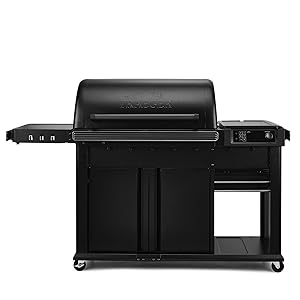
- Set grill to 225°F. On a pellet grill, enable Super Smoke mode (Traeger) or maximum smoke setting
- Place ribs bone-side down on the grill grate — bone acts as a heat shield for the meat
- Don’t open the lid for the first 2 hours — you’re building bark and smoke ring
- After 3 hours, ribs should have a mahogany color and the rack should flex slightly when lifted from one end
- Internal temp after phase 1 is typically 150°F–165°F
The smoke ring (the pink layer under the bark) forms during the first few hours when myoglobin reacts with nitric oxide from the smoke. This reaction stops once the meat surface reaches ~170°F — so the first 3 hours in smoke are critical.
Step 3: Phase 2 — 2 Hours Wrapped (The Steam Phase)
Wrapping pushes through the stall and braises the ribs in their own juices, making them tender. Lay out a sheet of heavy-duty foil, place the rack meat-side down, and add:
- 2 tablespoons butter (cut into pats)
- 2 tablespoons brown sugar
- 2 tablespoons apple juice or apple cider vinegar
- Optional: a squeeze of honey
Fold the foil tightly to create a sealed packet. Place back on the grill at 225°F for 2 hours. Internal temperature should reach 195°F–203°F by the end of this phase.
Step 4: Phase 3 — 1 Hour Sauced and Unwrapped
Remove the ribs from the foil carefully — they’re fragile. Place back on the grill bone-side down. Apply a thin layer of BBQ sauce and cook at 225°F for 45 minutes. Apply a second coat and cook another 15 minutes. The sauce caramelizes and sets — don’t use too much or it burns.
At high heat, BBQ sauce burns before it caramelizes properly. Keep the grill at 225°F during the sauce phase — low and slow lets the sugar develop depth without charring.
How to Tell When Ribs Are Done
| Test | What to Look For | Notes |
|---|---|---|
| Bend test (most reliable) | Rack bends 90°+ and surface cracks when lifted from one end | Toothpick slides between bones with almost no resistance |
| Internal temperature | 195°F–203°F in the thickest meat between bones | Use MEATER Plus or ThermoWorks probe — temperature is a guide, not the finish line |
| Bone pull-back | Bones have pulled back 1/4–1/2 inch from the meat ends | Visible bone exposure indicates collagen has broken down |
| Toothpick test | Toothpick slides between bones with almost no resistance | Like probing brisket — zero resistance = done |
3-2-1 Method Timing Reference
| Phase | Time |
| Phase 1 — Smoke | 3 hours |
| Phase 2 — Wrapped | 2 hours |
| Phase 3 — Sauce | 1 hour |
| Total | 6 hours |